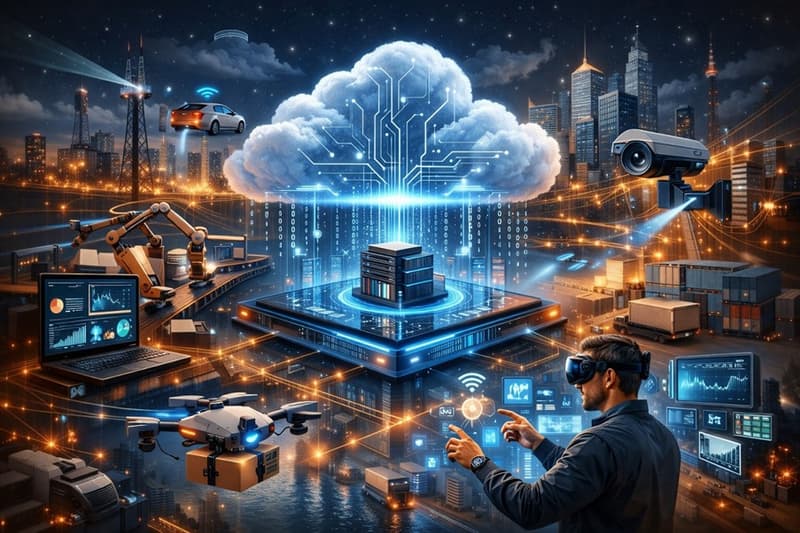
Technology has become one of the most powerful drivers of change in the modern world. From artificial intelligence to cloud computing, technological advancements are transforming industries, reshaping economies, and influencing how people live and work.
The Role of Technology in Economic Growth
Technological innovation plays a key role in increasing productivity and economic expansion. Research shows that technology contributes significantly to long-term growth.
Technology has long been recognized as a key driver of economic growth. While capital and labor are important, technological innovation plays a crucial role in increasing productivity and improving living standards.
Studies have shown that improvements in technology account for a significant portion of economic growth, often exceeding the contributions of capital investment alone . This highlights the importance of innovation in driving long-term economic development.
The Digital Economy
The digital economy has become a central component of global economic activity. It encompasses a wide range of technologies, including the internet, mobile devices, and digital platforms. These technologies enable businesses to operate more efficiently and reach customers on a global scale.
However, the rapid growth of the digital economy also presents challenges. There is a risk that the benefits of digitalization may be unevenly distributed, potentially widening the gap between developed and developing economies.
Artificial Intelligence and Automation
Artificial intelligence (AI) and automation are transforming the way businesses operate. AI technologies can analyze large amounts of data, identify patterns, and make decisions with minimal human intervention. This has applications across various industries, including finance, healthcare, and manufacturing.
Automation, on the other hand, is improving efficiency by reducing the need for manual labor. While this can lead to cost savings and increased productivity, it also raises concerns about job displacement and the need for workforce reskilling.
Technology and Financial Inclusion
Technology has played a significant role in improving financial inclusion. Digital platforms have made it easier for individuals and businesses to access financial services, particularly in underserved regions.
Research indicates that digital technology can enhance the impact of financial inclusion on economic growth by improving access to financial services and reducing barriers to entry. This demonstrates the potential of technology to create more inclusive economic systems.
Cybersecurity and Data Privacy
As technology becomes more integrated into daily life, cybersecurity and data privacy have become critical concerns. Businesses and individuals must protect sensitive information from cyber threats, which are becoming increasingly sophisticated.
Investing in cybersecurity measures and adopting best practices for data protection are essential for maintaining trust in digital systems. Governments and organizations must work together to establish regulations and standards that ensure the security of digital infrastructure.
The Future of Technology
The future of technology is likely to be shaped by continued innovation and the integration of emerging technologies. Areas such as quantum computing, blockchain, and advanced AI have the potential to revolutionize industries and create new opportunities.
At the same time, addressing challenges such as digital inequality, ethical considerations, and environmental impact will be critical. Ensuring that technology benefits society as a whole will require collaboration between governments, businesses, and individuals.
Technology is not just a tool; it is a catalyst for transformation. Its impact extends beyond economic growth, influencing social structures, cultural norms, and global interactions. As technology continues to evolve, its role in shaping the future will only become more significant.