For decades, technological progress followed a familiar pattern.
New inventions arrived dramatically and visibly. The internet transformed communication. Smartphones reshaped daily life. Social media changed human interaction. Cloud computing revolutionized business operations. Artificial intelligence emerged as one of the most discussed technologies in modern history.
Each wave of innovation carried a recognizable public identity.
People could see the transformation happening around them.
But the next great technology revolution may look very different.
In fact, many of the technologies likely to reshape the global economy over the coming decade may become so deeply integrated into everyday systems that most people barely notice them at all.
This is the paradox of modern innovation.
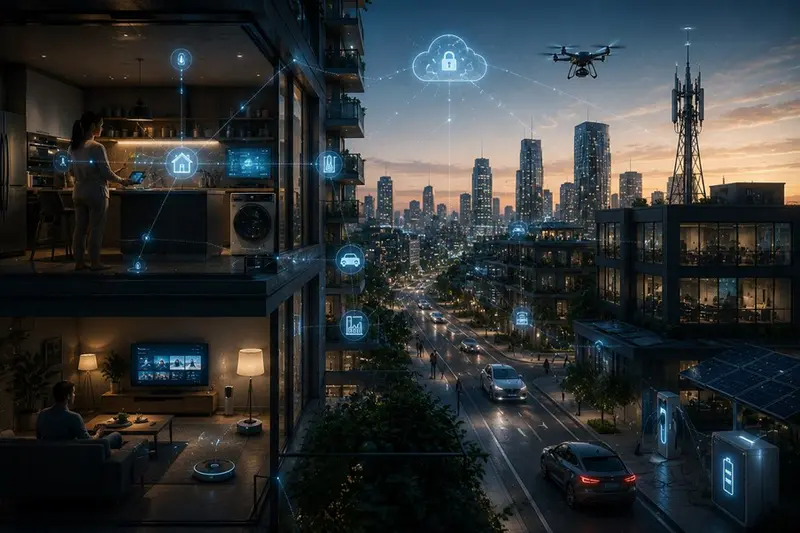
The most important technologies of the future may not be the loudest, flashiest, or most visible. Instead, they may operate quietly beneath the surface — embedded inside infrastructure, workflows, financial systems, logistics networks, healthcare platforms, communication tools, and intelligent automation systems that function almost invisibly.
Technology is no longer simply creating products.
It is increasingly becoming the environment itself.
And that shift may fundamentally redefine how businesses, governments, and individuals experience innovation.
The End of Visible Technology
For much of modern history, technology arrived as something external to daily life.
People consciously adopted new devices and systems. They learned how to use computers, install software, navigate the internet, or interact with smartphones. Technological adoption was highly visible because users actively engaged with new tools.
Today, however, technology is becoming increasingly ambient.
Artificial intelligence operates inside search engines, financial systems, logistics platforms, customer service tools, recommendation algorithms, and cybersecurity infrastructure without requiring constant user awareness. Cloud computing powers countless digital services invisibly. Smart systems automate processes behind the scenes. Algorithms influence decisions without obvious human interaction.
The future of technology may therefore become increasingly seamless rather than overt.
According to Gartner’s strategic technology predictions for 2026, businesses are moving toward “invisible infrastructure” models where AI, automation, and intelligent systems integrate directly into enterprise operations with minimal visible user interaction. (gartner.com)
This transformation changes how society perceives innovation itself.
The next wave of technological disruption may not arrive through devices people consciously use.
It may emerge through systems people barely notice.
Artificial Intelligence Is Becoming Infrastructure
Artificial intelligence is perhaps the clearest example of this shift.
Public discussion around AI often focuses on visible applications such as chatbots, image generators, or virtual assistants. But the most profound impact of AI may happen far away from public attention.
AI is increasingly becoming embedded directly into infrastructure.
Banks use AI to detect fraud in real time. Supply chains rely on machine learning to forecast disruptions. Cybersecurity systems use AI to identify threats before human analysts detect them. Healthcare providers deploy AI-assisted diagnostics. Manufacturers automate operational optimization using intelligent systems running continuously in the background.
In many cases, users interact with AI-driven environments without explicitly recognizing it.
This matters because infrastructure-level technologies reshape economies more deeply than consumer-facing products alone.
Microsoft’s latest enterprise AI analysis suggests that organizations increasingly view AI not simply as a productivity tool, but as a foundational operational layer capable of transforming how businesses function internally. (techradar.com)
The implications are enormous.
When technology becomes infrastructure, it stops feeling optional.
It becomes embedded into the structure of daily life itself.
Why Simplicity Is Becoming More Important Than Complexity
One of the most surprising trends in modern technology is the growing value of simplicity.
For years, innovation often emphasized complexity. Businesses added more features, more systems, more integrations, and more functionality. Sophisticated technology became associated with advanced capability.
But as digital environments become increasingly complicated, users are beginning to prioritize something different.
They want technology that feels effortless.
This is leading to a major philosophical shift across the industry.
The strongest technologies of the future may not be the most noticeable. They may be the systems that remove friction so effectively users barely think about them at all.
Payment systems now operate invisibly through mobile devices and digital wallets. Streaming platforms automate content delivery seamlessly. Cloud services synchronize information continuously without manual intervention. Smart logistics networks optimize global shipping behind the scenes.
The technology succeeds precisely because it disappears into the experience itself.
This reflects a broader evolution in how innovation creates value.
Modern technology increasingly succeeds not by demanding attention, but by reducing complexity.
The Quiet Rise of Autonomous Systems
Another major transformation underway is the rise of autonomous systems.
Historically, software required direct human instruction. Users interacted explicitly with programs, entered commands, and manually controlled workflows.
Modern AI systems increasingly operate independently.
Autonomous software agents can schedule meetings, analyze data, optimize logistics, manage inventory, monitor cybersecurity threats, and even make operational recommendations with minimal human intervention.
This trend is accelerating rapidly.
The World Economic Forum recently highlighted that AI-driven autonomous systems are evolving from isolated productivity tools into operational ecosystems capable of managing complex enterprise workflows across industries. (weforum.org)
The long-term implications are profound.
Businesses may gradually shift from managing software tools directly toward supervising intelligent systems capable of continuous adaptation and self-optimization.
This does not mean humans disappear from the process.
But it does mean the relationship between people and technology is changing fundamentally.
Technology is evolving from passive tools into active operational participants.
Why Human Skills Are Becoming More Valuable
Ironically, the rise of invisible technology may increase the importance of human capabilities rather than diminish them.
As machines handle repetitive tasks and background optimization, human value increasingly shifts toward creativity, judgment, emotional intelligence, ethical reasoning, and strategic thinking.
This creates an important paradox.
The more sophisticated technology becomes, the more organizations depend on distinctly human qualities to guide it effectively.
Algorithms can process information rapidly, but they still struggle with contextual understanding, cultural interpretation, ethical ambiguity, and long-term societal impact.
Modern organizations increasingly recognize this tension.
Research from Deloitte’s Global Technology Leadership Study found that businesses are placing growing emphasis on leadership adaptability, communication, and human-centered decision-making as AI becomes more deeply integrated into enterprise systems. (deloitte.com)
This suggests the future workforce may look very different from the industrial models that shaped previous economic eras.
Routine execution becomes increasingly automated.
Human contribution becomes increasingly strategic.
Technology Is Redefining Time Itself
One of the least discussed effects of modern technology is its impact on time perception.
Digital systems have dramatically accelerated expectations around communication, transactions, and decision-making. Information now moves globally in seconds. Consumers expect immediate responses. Businesses operate continuously across time zones.
Technology compressed time.
But as systems become faster, organizations are discovering a surprising challenge: human cognition still requires reflection.
Continuous acceleration creates cognitive pressure. Employees face constant notifications, real-time analytics, endless communication streams, and rapidly shifting priorities. Leaders must process enormous amounts of information while making increasingly complex decisions.
This creates a strange contradiction.
Technology improves speed, but speed alone does not guarantee clarity.
Some of the most forward-thinking companies are therefore redesigning workflows around focus, simplification, and intentionality rather than endless acceleration.
This may become one of the defining business trends of the next decade.
Because as technology accelerates further, the ability to think clearly may become one of the rarest competitive advantages of all.
Why Cybersecurity Is Becoming a Foundation of Modern Society
As technology becomes invisible infrastructure, cybersecurity is evolving into something far larger than an IT concern.
Digital systems now support financial markets, healthcare networks, transportation infrastructure, communication platforms, supply chains, and government operations. The modern economy depends heavily on interconnected digital environments functioning continuously and securely.
This makes cybersecurity foundational to societal stability itself.
Yet cyber threats are becoming increasingly sophisticated.
Artificial intelligence enables both stronger defense systems and more advanced attacks. State-sponsored cyber operations, ransomware networks, misinformation campaigns, and infrastructure targeting continue expanding globally.
The challenge is that most people rarely see cybersecurity directly.
Like many modern technologies, it operates invisibly until failure occurs.
This reflects a broader reality about modern innovation.
The technologies shaping society most profoundly are often the ones users notice least — until disruption exposes their importance.
The Future of Technology May Be More Human Than Expected
Despite rapid technological advancement, one of the most important shifts happening across industries is a growing recognition that technology alone cannot solve every problem.
Organizations increasingly understand that trust, ethics, adaptability, communication, and leadership remain essential to successful innovation.
Technology changes systems.
But people determine how those systems are used.
This is why many businesses are moving toward more human-centered approaches to digital transformation. Companies are investing not only in AI infrastructure and automation, but also in workforce development, ethical governance, and organizational adaptability.
The future of technology may therefore become less about replacing people and more about amplifying human capability intelligently.
This distinction matters enormously.
Because the next era of innovation may not be defined by machines operating independently from humanity.
It may be defined by how effectively humans and intelligent systems collaborate together.
The Businesses That Will Shape the Next Decade
Ultimately, the companies most likely to lead the next decade may not be the organizations creating the loudest technologies.
They may be the businesses building systems so seamless, adaptive, and integrated that users barely notice the technology itself.
These organizations will focus less on spectacle and more on infrastructure. Less on visibility and more on functionality. Less on forcing users to adapt to technology and more on designing technology that adapts naturally to human behavior.
Most importantly, they will understand something many still overlook:
The future of technology is not simply about machines becoming smarter.
It is about technology becoming so deeply embedded into daily life that it quietly reshapes how societies function without constantly demanding attention.
And in that future, the most powerful innovations may not be the ones everyone talks about.
They may be the ones operating silently beneath the surface of everything we do.