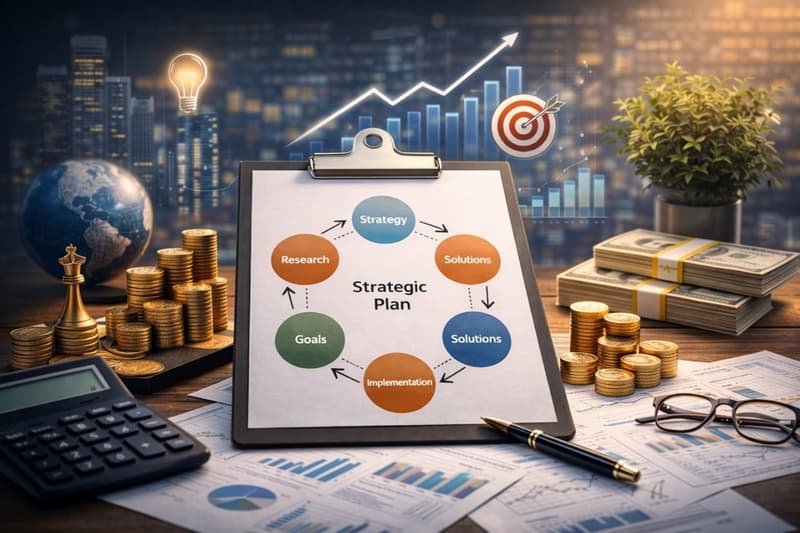
In today’s dynamic and highly competitive environment, businesses are constantly seeking ways to achieve sustainable growth while maintaining operational efficiency and resilience. Among the many factors that contribute to long-term success, strategic planning stands out as one of the most critical. It provides organisations with a structured approach to decision-making, enabling them to allocate resources effectively, anticipate challenges, and capitalise on opportunities.
Strategic planning is not merely a periodic exercise—it is an ongoing process that aligns a company’s goals, operations, and financial resources with its long-term vision. As markets evolve and uncertainties increase, businesses that prioritise strategic planning are better positioned to adapt, compete, and thrive.
Understanding Strategic Planning in Business
Strategic planning involves defining an organisation’s direction and making decisions on allocating resources to pursue that direction. It typically includes setting objectives, analysing internal and external environments, and developing actionable plans.
This process enables businesses to move beyond short-term decision-making and focus on long-term outcomes. It also helps organisations establish a clear roadmap for growth, ensuring that all departments and stakeholders are aligned with the company’s vision.
Research highlights that structured planning allows businesses to allocate resources more efficiently and respond effectively to market changes, ultimately supporting sustainable growth.
Why Strategic Planning Matters
Strategic planning plays a vital role in business success for several reasons:
Clarity of Direction
A well-defined strategy provides a clear sense of purpose and direction. It ensures that all efforts are aligned toward common objectives.
Improved Decision-Making
Strategic planning enables businesses to make informed decisions based on data, analysis, and long-term goals rather than short-term pressures.
Efficient Resource Allocation
By identifying priorities, organisations can allocate resources more effectively, ensuring that investments are directed toward high-impact areas.
Enhanced Resilience
Businesses with strong strategic plans are better equipped to navigate uncertainties and adapt to changing conditions.
According to industry research, aligning financial and strategic planning helps organisations maximise profitability and achieve long-term success.
The Link Between Strategic Planning and Financial Performance
Strategic planning is closely connected to financial performance. A well-structured strategy ensures that financial resources are used efficiently and that investments align with business objectives.
Financial planning elements such as budgeting, forecasting, and capital allocation are integral to strategic planning. These components enable businesses to evaluate potential outcomes and make informed decisions.
Studies show that organisations with disciplined financial planning frameworks are more likely to achieve sustained growth and improved profitability.
This connection underscores the importance of integrating financial considerations into strategic planning processes.
Key Components of Effective Strategic Planning
Effective strategic planning involves several key components:
1. Goal Setting
Defining clear and measurable objectives is the foundation of any strategic plan. These goals provide direction and serve as benchmarks for success.
2. Market Analysis
Understanding market trends, customer needs, and competitive dynamics is essential for developing effective strategies.
3. Resource Allocation
Strategic planning ensures that resources—financial, human, and technological—are allocated efficiently.
4. Risk Management
Identifying potential risks and developing mitigation strategies is a critical aspect of planning.
5. Performance Monitoring
Regular evaluation of progress helps ensure that strategies remain aligned with objectives.
By incorporating these elements, businesses can create comprehensive plans that support long-term growth.
Adapting to Changing Market Conditions
One of the primary benefits of strategic planning is its ability to help businesses adapt to changing market conditions. Economic fluctuations, technological advancements, and evolving consumer preferences all influence business performance.
Strategic planning enables organisations to anticipate these changes and respond proactively. For example, businesses can adjust their product offerings, explore new markets, or invest in innovation to stay competitive.
Growth planning frameworks also emphasise the importance of adapting resources and strategies to changing conditions, helping businesses maintain momentum and relevance in competitive markets.
The Role of Data and Analytics
Data and analytics are becoming increasingly important in strategic planning. By analysing financial and operational data, businesses can gain valuable insights into performance, trends, and opportunities.
Data-driven decision-making allows organisations to:
- Identify areas for improvement
- Optimise operations
- Forecast future performance
- Reduce uncertainty
Financial analysis, in particular, plays a crucial role in business planning by helping organisations evaluate their financial health and make informed decisions about growth and investment.
As technology continues to evolve, the use of data analytics in strategic planning is expected to grow.
Strategic Planning and Innovation
Innovation is a key driver of business growth, and strategic planning plays an important role in fostering innovation. By identifying opportunities and allocating resources to research and development, businesses can create new products, services, and processes.
Strategic planning also encourages a culture of continuous improvement, where organisations regularly assess and refine their strategies to remain competitive.
This proactive approach to innovation helps businesses stay ahead of industry trends and meet changing customer expectations.
Challenges in Strategic Planning
Despite its importance, strategic planning can present challenges:
Uncertainty
Predicting future market conditions is inherently difficult, making it challenging to develop accurate plans.
Resource Constraints
Limited resources can restrict the ability to implement strategic initiatives.
Organisational Resistance
Change can be difficult to implement, particularly in large organisations with established processes.
Execution Gaps
Even well-designed strategies can fail if they are not executed effectively.
Addressing these challenges requires strong leadership, clear communication, and a commitment to continuous improvement.
The Importance of Execution
While strategic planning is essential, execution is equally important. A well-crafted plan must be supported by effective implementation to achieve desired outcomes.
Execution involves:
- Translating strategy into actionable steps
- Assigning responsibilities
- Monitoring progress
- Adjusting plans as needed
Businesses that focus on both planning and execution are more likely to achieve their goals and sustain growth.
The Future of Strategic Planning
As the business environment continues to evolve, strategic planning is becoming more dynamic and adaptable. Emerging trends include:
Agile Planning
Businesses are adopting more flexible approaches that allow for rapid adjustments.
Integration with Technology
Digital tools and analytics are enhancing planning capabilities.
Focus on Sustainability
Organisations are incorporating environmental and social considerations into their strategies.
Greater Emphasis on Collaboration
Cross-functional collaboration is becoming increasingly important in developing and implementing strategies.
These trends highlight the evolving nature of strategic planning and its continued relevance in modern business.
Strategic planning is a cornerstone of sustainable business growth. By providing a structured framework for decision-making, resource allocation, and risk management, it enables organisations to navigate complexity and achieve long-term success.
In an increasingly competitive and unpredictable environment, businesses that prioritise strategic planning are better equipped to adapt, innovate, and thrive. By aligning financial resources, operational activities, and long-term objectives, strategic planning supports resilience and growth.
As markets continue to evolve, the importance of strategic planning will only increase. Organisations that embrace structured, data-driven, and adaptable approaches will be well-positioned to achieve sustainable success in the years ahead.